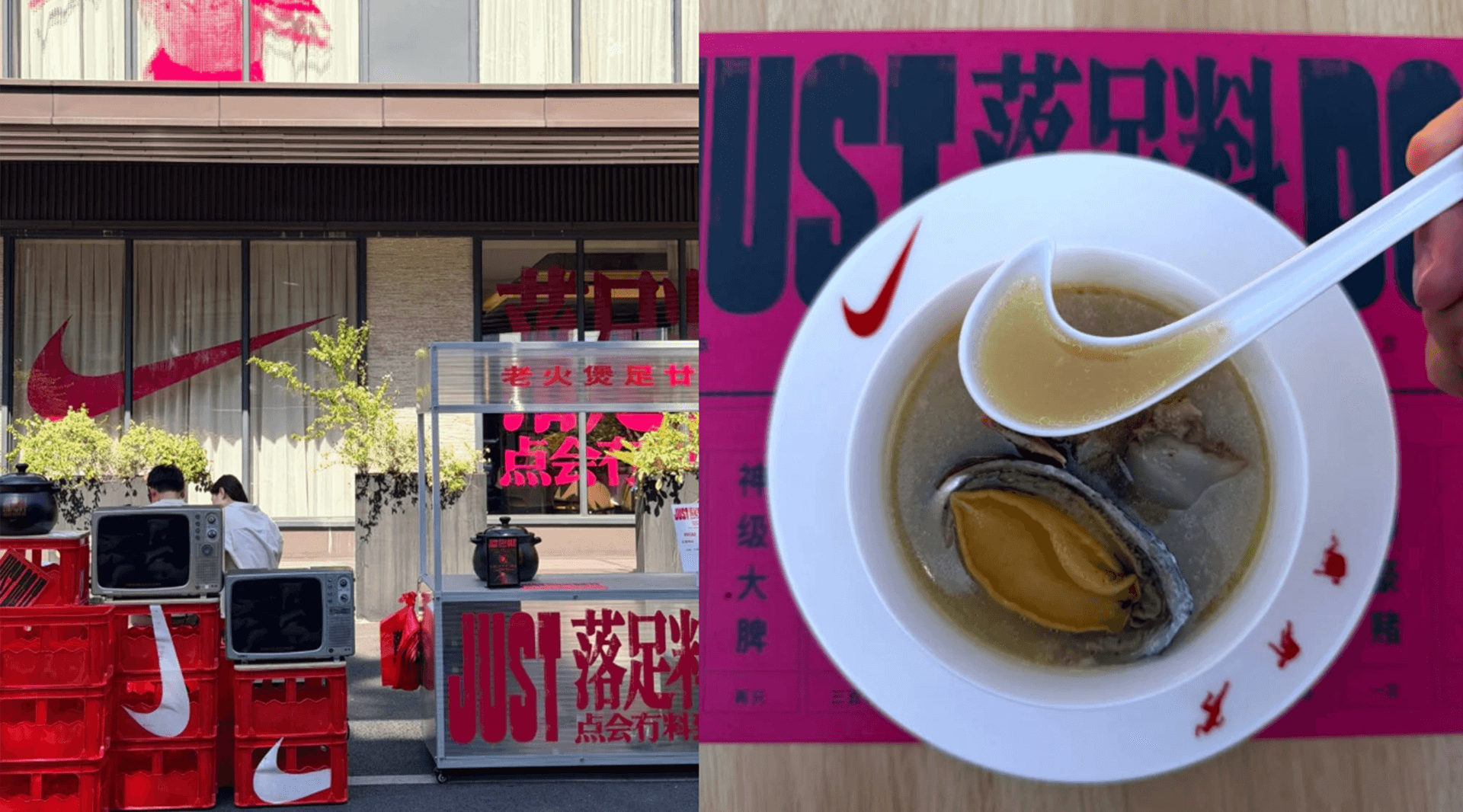
After the run on Ersha Island, you get hit with the smell first. Cantonese herbs. Steam coming off a pot. Nike has built a tiny soup stand that looks like it has always been there.
No hype. No gloss. Just a warm bowl at the end of a sweaty route. It has already become a regular stop for runners in Guangzhou. Su Bingtian ladling broth into paper cups is the sort of detail that tells you everything. It is Nike behaving like a neighbour, not an icon.
What stands out is not the soup, but the change in approach.
Nike once focused on going big, chasing scale and myth. They still do that in many ways, with global campaigns and big stories. However, they now also do things like this.
After a run, you get bitter melon broth in a paper cup and a spoon with the swoosh that feels worth keeping. It is intentionally small. Designed to be local. The kind of detail you only notice if you are present.
The bowls feature the classics: dried tangerine peel, pork ribs, bitter melon. These are familiar Cantonese healing foods, the kind your aunt might insist on after exercise. Modern running culture meets old family ritual. Nike seems to have realised you do not need to invent a new culture when you can borrow a real one and make it feel new.
The pop-up is easy to miss. No clutter. No big logos. Just a stall that matches how you feel after a run. That is the idea. The brand is more like a guest than a host. It feels like authentic hospitality, not a marketing push.
This is part of a larger shift happening in China. Outdoor sports have grown by almost 20% in the past year, particularly among younger people who are less interested in traditional hero stories. They want routine, ritual, and a lifestyle that includes wellness. The brands that understand this are the ones paying attention to how people actually live. Hoka, Salomon, and On design for real habits, not just for presentations.
Other brands are taking similar steps. Adidas partnered with Ravi Restaurant in Al Satwa to create a limited-edition shoe inspired by the restaurant’s green uniforms and menu design. Adidas brings the city into its products. Nike blends into the culture around running. Both brands want to belong in the neighbourhood. Both understand that global uniformity is a thing of the past.
This is not just about selling shoes. It is about recognising what matters now. A bowl of broth after a run is not a gimmick. It has meaning.
The brands that understand are asking a new question. Not how big they can go, but how small they can get before people notice.